B.S. Program — Initial Teacher Certification Pathway

Computer Science Education (K-12)

University of South Florida, College of Education — prepare to deliver high-quality computer science instruction across grade levels with a fully online undergraduate degree leading to Florida teacher certification.

  • 120 credit hours — full undergraduate B.S. degree
  • 10 specialized CS courses aligned to FTCE exam competencies
  • Free AI-powered FTCE test preparation platform for all enrolled students
Fall 2026 program start
100% Online with clinical experience

Prepare to Teach Computer Science with Confidence

The B.S. in Computer Science Education (K-12) prepares future teachers to deliver high-quality CS instruction across grade levels. The program features 10 specialized computer science courses (30 credits) aligned with the FTCE Computer Science K–12 exam competencies, ensuring comprehensive preparation for state certification.

Key Skills & Outcomes
  • Teach computational thinking, problem solving, and foundational programming
  • Support diverse learners through effective instructional planning and learning environments
  • Build readiness for field experiences, clinical education, and the final field experience
  • Develop practical strategies for teaching CS in K-12 classrooms
Program Overview
  • Degree: Bachelor of Science in Computer Science Education (K-12)
  • Total Credits: 120 credit hours
  • Format: 100% online with clinical education and field experience requirements
  • Start Date: Fall 2026
  • Outcome: Initial Florida teacher certification in Computer Science K–12

Career Opportunities & Pathways

A degree in Computer Science Education opens doors to meaningful careers in and beyond the K–12 classroom.

Primary Career Path — K–12 CS Teacher

The direct outcome of this program is initial Florida teacher certification in Computer Science K–12. Graduates teach across all grade levels:

  • Elementary — introductory coding and computational thinking
  • Middle School — foundations, Scratch, and logic
  • High School — Java, AP CS, and advanced topics

Work in public schools, charter schools, or private schools throughout Florida.

High-Demand Field

CS teachers are in short supply nationwide. Schools increasingly require instruction in coding, AI literacy, and digital skills.

  • Strong job security
  • Faster hiring compared to many other teaching fields
  • Opportunities to lead and build new CS programs at schools
Expanded Roles in Education
  • Instructional Technology Specialist — help schools integrate AI tools, coding platforms, and EdTech systems; train other teachers
  • Curriculum Developer — design coding curriculum and digital learning materials for school districts or EdTech companies
  • Department Chair / CS Program Lead — lead a school's CS program and oversee curriculum and teacher training
Alternative & Non-Classroom Careers

Because you learn programming alongside pedagogy, you can pivot into:

  • EdTech Industry — instructional designer, learning experience designer, training specialist
  • Corporate Trainer — teach coding or digital skills at companies, bootcamps, or workforce programs
  • Graduate Study — M.S. in CS, Educational Technology, or Instructional Design; pathways to college instructor or researcher roles
Salary & Program Advantages

Salary Expectations (Florida)

  • Entry-level teacher: ~$50K–$65K
  • With experience / leadership: ~$65K–$85K+
  • EdTech / corporate roles: $80K–$100K+

Unique Advantages of This Program

  • Full degree + certification (not just an add-on)
  • Real classroom experience through internship
  • Programming skills — Java, Scratch, algorithms
  • AI-supported FTCE prep platform
  • 100% online flexibility

Course Requirements

Organized by required subcategories. All courses below are part of the 120-credit B.S. program beginning Fall 2026.

State-Mandated Prerequisite

Required prior to progression into the teacher preparation sequence.

EDF 2005 — Introduction to Teaching Profession (3 credits)
Math Pathway Requirements

Complete 6 credits (or higher-level approved math).

MGF 1130 — Mathematical Thinking (3 credits)
MGF 1131 — Mathematical Thinking in Context (3 credits)
Professional Education Courses 7 courses — 21 credits
Foundations of Education
EDF 3604 — Schools and Society (3 credits)
Measurement
EDF 4430 — Measurement for Teachers (3 credits)
Classroom Management & Instructional Design
EDE 4504 — Creating and Differentiating Learning Environments (3 credits)
Content Literacy
RED 4333 — Content Area Reading (3 credits)
Mathematical Practices
MAE 4310 — Teaching Elementary School Mathematics (3 credits)
Exceptional Student Education
EXE 4070 — Integrating Exceptional Student Education in the Regular Classroom (3 credits)
ESOL
TSL 4080 — ESOL Curriculum and Pedagogy (3 credits)
Computer Science Certification Courses and Clinical Experiences 10 courses — 39 credits
(a) Computer Applications
EDG 4430 — Computational Thinking and Problem Solving for Teachers (3 credits) · New course
Algorithmic thinking, problem-solving strategies, and the software development life cycle.
FTCE Competency 1 — 15%
Syllabus
EDG 4431 — Data Representation and Structures for Teachers (3 credits) · New course
Data types, number systems, arrays, stacks, queues, and object-oriented concepts.
FTCE Competency 2 — 15%
Syllabus
EDG 4432 — Computer Systems and Networking for Teachers (3 credits) · New course
Hardware components, software types, productivity applications, and networking fundamentals.
FTCE Competency 5 — 10%
Syllabus
EDG 4433 — History and Social Issues in Computing for Teachers (3 credits) · New course
Historical milestones, ethical use of technology, and social implications of computing.
FTCE Competency 6 — 10%
Syllabus
(b) Computer Programming
EDG 4434 — Programming Logic and Algorithm Design for Teachers (3 credits) · New course
Debugging, algorithmic sequences, conditionals, loops, and recursion.
FTCE Competency 3 — 20%
Syllabus
EDG 4435 — Programming in Scratch for Teachers (3 credits) · New course
Scratch to introduce core programming constructs and teaching strategies.
FTCE Competency 4 — 20%
Syllabus
EDG 4436 — Object-Oriented Programming in Java for Teachers (3 credits) · New course
Java syntax, classes, methods, inheritance, and polymorphism.
FTCE Competency 4 — 20%
Syllabus
EDG 4437 — Teaching and Learning Computer Science for Teachers (3 credits) · New course
Pedagogy, classroom management, instructional strategies, and assessment methods.
FTCE Competency 7 — 10%
Syllabus
(c) Field Experience
EDG 4438 — Computer Science Early Field Experiences (3 credits) · New course
Syllabus
EDG 4439 — Computer Science Final Field Experience (12 credits) · New course
FTCE Competency ALL — 100%
Syllabus

Advising Note

Final sequencing, prerequisites, and internship credit totals are confirmed through advising and catalog publication.

FTCE Certification Exam Requirements

After completing all coursework, students are required to pass three FTCE examinations during their final internship to earn initial teacher certification in Computer Science K–12.

FTCE General Knowledge

Assesses basic skills in reading, writing, mathematics, and essay composition required for all Florida teacher candidates.

FTCE Professional Education

Evaluates knowledge of professional teaching practices, educational psychology, classroom management, and assessment strategies.

FTCE Computer Science K–12

Tests mastery of the 7 core competencies in computer science content and pedagogy specific to K–12 instruction.

FREE AI-Powered FTCE Test Preparation Platform

The USF College of Education provides full, free access to all enrolled students. This comprehensive test preparation platform was developed by USF in Spring 2026 to support student success on all FTCE examinations.

Platform Features:

  • Comprehensive study content for all three FTCE exams
  • Interactive quizzes aligned to exam competencies
  • Full-length practice exams with detailed scoring
  • Performance tracking and progress analytics

AI-Powered Support:

  • 24/7 AI-supported "Ask a Question" feature
  • Instant answers to exam content questions
  • Personalized study recommendations
  • Adaptive practice based on your performance

100% FREE for All Enrolled Students

No additional costs or subscriptions required — full platform access is included for every student enrolled in the Computer Science Education program.

How to Get Started

Apply to USF as an undergraduate student and start your path to becoming a certified K-12 Computer Science teacher.

Admission Deadlines
Fall 2026 Semester Start
August 1, 2025 Fall application opens.
June 1, 2026 Final Application Deadline
Submit your application by this date to be considered for Fall admission.
June 15, 2026 Final Materials Deadline
Submit all required documents to USF by June 15 to be considered for Fall admission.
August 24, 2026 Fall Classes Begin
Spring 2027 Semester Start
March 1, 2026 Spring application opens.
November 1, 2026 Final Application Deadline
Submit your application by this date to be considered for Spring admission.
November 16, 2026 Final Materials Deadline
Submit all required documents to USF by November 16 to be considered for Spring admission.
January 11, 2027 Spring Classes Begin
Required Documents
  • Complete online application
  • $30 non-refundable application fee
  • Official/Unofficial transcripts

Cost & Financial Information

Plan your investment — tuition depends on residency status, course load, and standard university fees.

Cost of Attendance

Your cost depends on residency, course load, and standard university fees. For current tuition rates visit the University Controller's Office.

  • University fees and course-specific fees may apply
  • Clinical placement-related costs may apply as applicable
  • Florida residency reduces tuition — see Office of the Registrar

Note: Additional costs like materials are not reflected in tuition and fees.

Financial Aid Options

Undergraduate students may qualify for federal and state financial aid and scholarships.

Need Guidance?

Contact Financial Aid for individualized guidance based on your enrollment and residency status.

Meet Program Faculty

The program is led by experienced USF College of Education faculty specializing in computer science education and instructional technology.
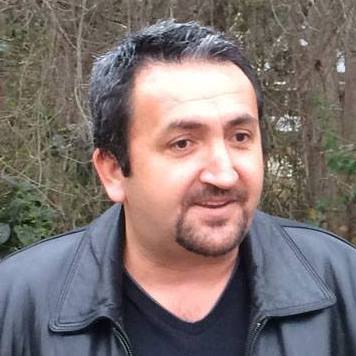
Zafer Unal
Zafer Unal
Program Lead

Professor & Associate Dean of Undergraduate Studies, USF College of Education

unal@usf.edu

Expert in educational technology and computer science education. Leads initiatives in curriculum transformation, AI in education, and student success. Research focuses on developing tools to make learning more accessible and engaging across K-12 and higher education contexts.

Stephanie Arthur
Stephanie Arthur, Ph.D.
Assistant Professor

Assistant Professor, Science Education — USF College of Education

sat2@usf.edu

Expert in Science and STEAM Education with a focus on inclusive pedagogy. Leads research in generative AI to support teaching, learning, and community partnerships. Emphasizes designing innovative educational tools and promoting equitable learning opportunities.

Frequently Asked Questions

The program is planned to begin Fall 2026.

The CS Education sequence includes EDG 4430–4437 (8 content courses), plus field experiences EDG 4438 (Early Field Experiences) and EDG 4439 (Final Field Experience).

Clinical education includes EDE 4947, EDE 4948, and EDE 4949. These courses provide structured field experience in K-12 school settings.

All 10 computer science courses (30 credits) are specifically aligned with the seven FTCE Computer Science K–12 exam competencies. Each course covers the content knowledge and skills needed to pass the state certification exam. You also get free access to the AI-powered FTCE preparation platform.

Students must pass three FTCE exams during their final internship:

1. FTCE General Knowledge Exam
2. FTCE Professional Education Exam
3. FTCE Computer Science K–12 Subject Area Exam

USF provides FREE access to an AI-powered test preparation platform with content, quizzes, practice exams, and 24/7 question support for all three exams.

Use the Contact section below to connect with the program team for advising and next steps. You can reach us by email at unal@usf.edu or by phone at (813) 974-2011.

Contact Us

Have questions or need more information? We're here to help with program details, advising, and next steps.

Email

unal@usf.edu

Send Email
Phone

(813) 974-2011

Call Us
Location

University of South Florida
Tampa, FL 33620

Get Directions