B.S. Program — Initial Teacher Certification Pathway

Computer Science Education (K-12)

University of South Florida, College of Education — prepare to deliver high-quality computer science instruction across grade levels with a fully online undergraduate degree leading to Florida teacher certification.

  • 120 credit hours — full undergraduate B.S. degree
  • 10 specialized CS courses aligned to FTCE exam competencies
  • Free AI-powered FTCE test preparation platform for all enrolled students
Fall 2026 program start
100% Online with clinical experience

Prepare to Teach Computer Science with Confidence

The B.S. in Computer Science Education (K-12) prepares future teachers to deliver high-quality CS instruction across grade levels. The program features 10 specialized computer science courses (30 credits) aligned with the FTCE Computer Science K–12 exam competencies, ensuring comprehensive preparation for state certification.

Key Skills & Outcomes
  • Teach computational thinking, problem solving, and foundational programming
  • Support diverse learners through effective instructional planning and learning environments
  • Build readiness for field experiences, clinical education, and the final field experience
  • Develop practical strategies for teaching CS in K-12 classrooms
Program Overview
  • Degree: Bachelor of Science in Computer Science Education (K-12)
  • Total Credits: 120 credit hours
  • Format: 100% online with clinical education and field experience requirements
  • Start Date: Fall 2026
  • Outcome: Initial Florida teacher certification in Computer Science K–12

Unlike the Add-On Certification

This is a complete undergraduate degree program leading to initial Florida teacher certification in Computer Science — not an add-on. It is designed for students who do not yet hold a Florida teaching certificate.

Course Requirements

Organized by required subcategories. All courses below are part of the 120-credit B.S. program beginning Fall 2026.

State-Mandated Prerequisite

Required prior to progression into the teacher preparation sequence.

EDF X005 — Introduction to Teaching Profession (3 credits)
Math Pathway Requirements

Complete 6 credits (or higher-level approved math).

MGF 1130 — Mathematical Thinking (3 credits)
MGF 1131 — Mathematical Thinking in Context (3 credits)
Professional Education Courses 8 courses — 30 credits
Foundations of Education
EDF 3604 — Schools and Society (3 credits)
Measurement
EDF 4430 — Measurement for Teachers (3 credits)
Classroom Management & Instructional Design
EDE 4504 — Creating and Differentiating Learning Environments (3 credits)
Content Literacy and Math Practices
RED 4348 — Literacy Development (3 credits)
MAE 4310 — Teaching Elementary School Mathematics (3 credits)
Internship & Field Experience
EDG 4438 — Computer Science Early Field Experiences (3 credits)
New course
Syllabus
EDG 4439 — Computer Science Final Field Experience (credits vary)
New course — internship/final field experience
Syllabus
EDG 4934 — Seminar (1 credit)
Syllabus
Certification Content Specialized Courses 10 courses — 30 credits
(a) Computer Applications
EDG 4430 — Computational Thinking and Problem Solving for Teachers (3 credits) · New course
Algorithmic thinking, problem-solving strategies, and the software development life cycle.
FTCE Competency 1 — 15%
Syllabus
EDG 4431 — Data Representation and Structures for Teachers (3 credits) · New course
Data types, number systems, arrays, stacks, queues, and object-oriented concepts.
FTCE Competency 2 — 15%
Syllabus
EDG 4432 — Computer Systems and Networking for Teachers (3 credits) · New course
Hardware components, software types, productivity applications, and networking fundamentals.
FTCE Competency 5 — 10%
Syllabus
EDG 4433 — History and Social Issues in Computing for Teachers (3 credits) · New course
Historical milestones, ethical use of technology, and social implications of computing.
FTCE Competency 6 — 10%
Syllabus
(b) Computer Programming
EDG 4434 — Programming Logic and Algorithm Design for Teachers (3 credits) · New course
Debugging, algorithmic sequences, conditionals, loops, and recursion.
FTCE Competency 3 — 20%
Syllabus
EDG 4435 — Programming in Scratch for Teachers (3 credits) · New course
Scratch to introduce core programming constructs and teaching strategies.
FTCE Competency 4 — 20%
Syllabus
EDG 4436 — Object-Oriented Programming in Java for Teachers (3 credits) · New course
Java syntax, classes, methods, inheritance, and polymorphism.
FTCE Competency 4 — 20%
Syllabus
EDG 4437 — Teaching and Learning Computer Science for Teachers (3 credits) · New course
Pedagogy, classroom management, instructional strategies, and assessment methods.
FTCE Competency 7 — 10%
Syllabus

Advising Note

Final sequencing, prerequisites, and internship credit totals are confirmed through advising and catalog publication.

FTCE Certification Exam Requirements

After completing all coursework, students are required to pass three FTCE examinations during their final internship to earn initial teacher certification in Computer Science K–12.

FTCE General Knowledge

Assesses basic skills in reading, writing, mathematics, and essay composition required for all Florida teacher candidates.

FTCE Professional Education

Evaluates knowledge of professional teaching practices, educational psychology, classroom management, and assessment strategies.

FTCE Computer Science K–12

Tests mastery of the 7 core competencies in computer science content and pedagogy specific to K–12 instruction.

FREE AI-Powered FTCE Test Preparation Platform

The USF College of Education provides full, free access to all enrolled students. This comprehensive test preparation platform was developed by USF in Spring 2026 to support student success on all FTCE examinations.

Platform Features:

  • Comprehensive study content for all three FTCE exams
  • Interactive quizzes aligned to exam competencies
  • Full-length practice exams with detailed scoring
  • Performance tracking and progress analytics

AI-Powered Support:

  • 24/7 AI-supported "Ask a Question" feature
  • Instant answers to exam content questions
  • Personalized study recommendations
  • Adaptive practice based on your performance

100% FREE for All Enrolled Students

No additional costs or subscriptions required — full platform access is included for every student enrolled in the Computer Science Education program.

Program Matrices

The program narrative and alignment matrix below document how the B.S. in Computer Science Education (K-12) meets Florida Department of Education requirements for teacher preparation programs.

Program Narrative Statement

B.S. in Computer Science Education (K-12)

University of South Florida – College of Education

The Bachelor of Science in Computer Science Education (K-12) at the University of South Florida is an undergraduate initial teacher preparation program designed to prepare highly qualified educators to teach computer science across Florida's K-12 schools. The program is offered by the USF College of Education and leads to eligibility for initial Florida teacher certification in Computer Science K-12 upon successful completion of program requirements and required Florida Teacher Certification Examinations (FTCE).

The program requires completion of 120 credit hours and integrates foundational professional education coursework, specialized computer science content aligned to Florida certification competencies, and supervised clinical experiences. Coursework is delivered in a 100% online format while ensuring meaningful clinical experiences through structured field placements and a supervised final field experience in K-12 school settings.

The program curriculum is organized around three major components: general education and foundational preparation, professional education coursework, and specialized computer science content coursework. The professional education component includes courses in educational foundations, assessment and measurement, instructional design, literacy development, and mathematics instructional practices. These courses ensure candidates develop the pedagogical knowledge and skills necessary to support diverse learners and implement effective instruction in K-12 classrooms.

The specialized computer science coursework consists of ten courses (30 credit hours) aligned with the competencies assessed on the FTCE Computer Science K-12 examination. These courses prepare teacher candidates in computational thinking, programming, computer systems, networking, data structures, and the social and ethical implications of computing. Candidates also learn strategies for teaching computer science concepts effectively to diverse student populations.

Clinical practice is embedded throughout the program and includes early field experiences and a final field experience (internship) in K-12 classrooms. During early field experiences, candidates observe and practice instructional strategies under the supervision of mentor teachers. The final field experience provides candidates with extended teaching responsibilities and opportunities to demonstrate mastery of instructional planning, classroom management, instructional delivery, and assessment practices.

The program emphasizes the development of teachers who can design engaging learning environments, apply evidence-based instructional practices, and integrate computational thinking and problem-solving skills into K-12 education. Candidates also develop professional dispositions aligned with the Florida Educator Accomplished Practices (FEAPs) and the Uniform Core Curriculum requirements for teacher preparation programs.

To support student success on certification examinations, the program provides enrolled students with access to a USF-developed AI-supported FTCE preparation platform, which includes study materials, practice examinations, and adaptive learning tools aligned to the General Knowledge, Professional Education, and Computer Science K-12 FTCE exams.

Graduates of the program are prepared to teach computer science across grade levels and contribute to the growing need for qualified computer science educators in Florida schools. The program supports the state's efforts to expand high-quality computer science instruction and promote computational thinking and digital literacy for all students.

Uniform Core Curriculum Matrix

UCC Element EDF 3604
Schools & Society
EDF 4430
Measurement
EDE 4504
Learning Environments
RED 4348
Literacy
MAE 4310
Math Practices
EDG 4438
Early Field Experience
EDG 4439
Final Field Experience
State academic standards
(s.1003.41 F.S.)
Content literacy
Mathematical practices
Instructional design and lesson planning
Learning environment / classroom management
Instructional delivery and facilitation
Assessment and data-informed instruction
Continuous professional improvement

A checkmark indicates the course addresses this UCC element as required for Florida teacher preparation programs. Scroll horizontally on smaller screens to view all columns.

Endorsements

Reading Endorsement

The B.S. in Computer Science Education (K–12) program does not lead to a Reading Endorsement. Therefore, the program does not provide the full set of Reading Endorsement competencies required for endorsement.

ESOL Endorsement

The B.S. in Computer Science Education (K–12) program does not lead to an ESOL Endorsement. Accordingly, the program does not provide the full ESOL Endorsement competency sequence required for endorsement.

Clinical Experience Description

The B.S. in Computer Science Education (K–12) program at the University of South Florida provides candidates with structured and supervised clinical experiences designed to connect coursework with authentic classroom practice. Clinical experiences are integrated throughout the professional education sequence and culminate in a final field experience that allows candidates to demonstrate competency in planning, instruction, assessment, and professional responsibilities consistent with the Florida Educator Accomplished Practices (FEAPs).

Early clinical experiences begin with EDG 4438 — Computer Science Early Field Experiences, where candidates participate in guided observation and limited instructional practice in K–12 classroom settings. During this phase, candidates observe experienced teachers, analyze instructional strategies, and begin practicing instructional planning and delivery under supervision. These experiences allow candidates to apply concepts learned in coursework related to instructional design, classroom management, differentiation, and assessment.

The program culminates in EDG 4439 — Computer Science Final Field Experience, which serves as the program's internship. During the final field experience, candidates engage in sustained clinical practice in a K–12 classroom under the supervision of a certified mentor teacher and university supervisor. Candidates gradually assume responsibility for classroom instruction, including lesson planning, instructional delivery, classroom management, and assessment of student learning. Candidates demonstrate their ability to integrate computer science content knowledge with effective pedagogical strategies appropriate for diverse learners.

Throughout the clinical sequence, candidates receive ongoing feedback from mentor teachers and university supervisors. Clinical performance is evaluated using established program assessment instruments aligned with the Florida Educator Accomplished Practices. These evaluations ensure that candidates demonstrate professional competence and readiness for entry into the teaching profession.

Clinical experiences are designed to provide candidates with opportunities to work with diverse student populations and apply evidence-based instructional practices within authentic school environments. By the completion of the program, candidates demonstrate the ability to effectively plan and deliver computer science instruction, create supportive learning environments, assess student learning, and engage in continuous professional improvement.

Field Placement and Supervision

Field placements for the B.S. in Computer Science Education (K–12) program are coordinated by the University of South Florida College of Education in partnership with local school districts and approved educational settings. Clinical placements are arranged to provide candidates with meaningful opportunities to apply instructional strategies and develop teaching competencies in authentic K–12 classroom environments.

Candidates participating in clinical experiences are placed with qualified mentor teachers who hold valid Florida teaching certification and have demonstrated effective instructional practice. Mentor teachers provide guidance, model effective instructional strategies, and support candidates as they develop professional teaching skills. Candidates are gradually given increased instructional responsibilities throughout the clinical experience.

During the early field experience (EDG 4438), candidates engage in classroom observations, assist with instructional activities, and practice limited teaching responsibilities under the supervision of the mentor teacher. These experiences allow candidates to connect theoretical coursework with practical teaching experiences and begin developing professional teaching competencies.

The final field experience (EDG 4439) serves as the program's culminating clinical internship. During this experience, candidates assume significant responsibility for classroom instruction, including planning lessons, implementing instruction, managing the classroom environment, and assessing student learning. Candidates are expected to demonstrate mastery of instructional practices aligned with the Florida Educator Accomplished Practices (FEAPs).

Candidates are supervised by both a university supervisor and the mentor teacher throughout the clinical experience. The university supervisor conducts observations, provides feedback, and evaluates candidate performance using program assessment instruments aligned with program standards and the Florida Educator Accomplished Practices. Mentor teachers provide ongoing feedback and support the candidate's professional growth during the placement.

Regular communication between the university supervisor, mentor teacher, and teacher candidate ensures that candidates receive continuous guidance and formative feedback throughout the clinical experience. These collaborative supervision practices support candidate development and ensure that candidates demonstrate readiness for entry into the teaching profession.

Program Assessment System

The B.S. in Computer Science Education (K–12) program utilizes CampusFolio, an electronic assessment and portfolio management system, to monitor candidate progress, collect assessment data, and evaluate program outcomes. CampusFolio serves as the program's centralized platform for managing candidate artifacts, scoring assessments aligned with program standards, and documenting candidate performance throughout the teacher preparation program.

Teacher candidates are evaluated through critical assignments embedded within required coursework and clinical experiences. These assignments are aligned with the Florida Educator Accomplished Practices (FEAPs) and are designed to measure candidate proficiency in instructional planning, instructional delivery, assessment practices, learning environment management, and professional responsibility.

Each FEAP is assessed at least twice during the program to ensure candidates demonstrate both developing and culminating competency. The first evaluation occurs during relevant professional education coursework through course-based critical assignments. The second evaluation occurs during the final field experience (internship) through a comprehensive Teacher Work Sample, which requires candidates to demonstrate the ability to plan instruction, implement lessons, assess student learning, analyze student performance data, and reflect on instructional effectiveness.

Candidates are required to upload all critical assignments into the CampusFolio system prior to course completion. Faculty instructors evaluate candidate submissions using standardized FEAP-aligned rubrics developed for each competency area. These rubrics ensure consistency and reliability in candidate assessment across courses and instructors.

To successfully progress through the program, candidates must demonstrate a minimum performance level of "Accomplished" on each FEAP-aligned critical assignment. If a candidate does not meet the required performance level, the candidate is provided with targeted feedback and an opportunity to revise and resubmit the assignment. Candidates must demonstrate competency in all required FEAP areas before program completion and recommendation for certification.

During the final field experience, the Teacher Work Sample serves as a culminating assessment of candidate performance. This assessment provides evidence that candidates can effectively design standards-based instruction, implement teaching strategies appropriate for diverse learners, assess student learning outcomes, and engage in reflective practice. Performance on the Teacher Work Sample provides an additional measure of candidate readiness for entry into the teaching profession.

The program faculty regularly review assessment data collected through CampusFolio to monitor candidate progress and evaluate overall program effectiveness. Aggregate data from FEAP assessments and critical assignments are analyzed to identify trends in candidate performance and inform program improvement efforts. Findings from these analyses are used to guide curriculum refinement, instructional improvements, and faculty collaboration to ensure continuous program quality.

Through the use of a structured assessment system, standardized rubrics, and ongoing faculty review of candidate performance data, the program ensures that graduates demonstrate the professional knowledge, skills, and dispositions necessary to meet the Florida Educator Accomplished Practices and to be recommended for initial teacher certification in Computer Science K–12.

Florida Educator Accomplished Practices (FEAP) Matrix

B.S. Computer Science Education (K–12)

University of South Florida – College of Education

FEAP Standard EDF 3604
Schools & Society
EDF 4430
Measurement
EDE 4504
Learning Environments
EDG 4437
Teaching CS
EDG 4438
Early Field
EDG 4439
Final Internship
FEAP 1 – Instructional Design and Lesson Planning
FEAP 2 – Learning Environment
FEAP 3 – Instructional Delivery and Facilitation
FEAP 4 – Assessment
FEAP 5 – Continuous Professional Improvement
FEAP 6 – Professional Responsibility and Ethical Conduct

A checkmark indicates the course addresses this FEAP standard. Scroll horizontally on smaller screens to view all columns.

FTCE Computer Science K–12 Competency Matrix

Alignment of specialized CS content courses to FTCE exam competencies.

FTCE Competency EDG 4430
Computational Thinking
EDG 4431
Data Representation
EDG 4434
Programming Logic
EDG 4435
Scratch Programming
EDG 4432
Computer Systems
EDG 4433
History & Social Issues
EDG 4437
Teaching CS
EDG 4439
Final Internship
Competency 1 – Computational Thinking & Problem Solving
Competency 2 – Data Representation & Data Structures
Competency 3 – Programming Logic & Algorithm Design
Competency 4 – Computer Programming
Competency 5 – Computer Systems & Networking
Competency 6 – Social & Ethical Issues in Computing
Competency 7 – Computer Science Instruction & Pedagogy

A checkmark indicates that the course addresses the corresponding FTCE Computer Science K–12 competency. Scroll horizontally on smaller screens to view all columns.

Candidate Remediation and Support

The B.S. in Computer Science Education (K–12) program provides structured remediation and support processes to assist candidates who do not initially demonstrate the required level of proficiency on program assessments aligned with the Florida Educator Accomplished Practices (FEAPs). The purpose of remediation is to ensure that all candidates receive appropriate guidance and opportunities to successfully develop the professional knowledge and skills required for effective teaching.

If a candidate does not achieve the required performance level of "Accomplished" on a FEAP-aligned critical assignment, the faculty instructor provides detailed feedback identifying areas needing improvement. The candidate is then given the opportunity to revise and resubmit the assignment within a specified timeframe. Faculty may provide additional guidance, resources, or targeted support to help the candidate address identified deficiencies.

Candidates who demonstrate repeated difficulty meeting program expectations may be referred for additional support through advising and faculty consultation. A remediation plan may be developed outlining specific actions, timelines, and performance expectations needed to demonstrate competency. The program faculty monitor candidate progress throughout the remediation process to ensure that the candidate receives appropriate academic and professional support.

Successful completion of all FEAP-aligned assessments is required for program progression and recommendation for certification. Candidates must demonstrate proficiency across all required competencies prior to completing the final field experience and program graduation.

Through structured feedback, revision opportunities, and individualized support, the program ensures that all candidates are provided with meaningful opportunities to develop the professional competencies required for successful teaching practice.

How to Get Started

Apply to USF as an undergraduate student and start your path to becoming a certified K-12 Computer Science teacher.

General Guidance
  • Apply to USF as an undergraduate student and indicate interest in Computer Science Education (K-12), B.S.
  • Meet teacher preparation milestones — GPA, prerequisites, and progression requirements as applicable
  • Complete clinical education and the final field experience as part of the program

Cost & Financial Information

Plan your investment — tuition depends on residency status, course load, and standard university fees.

Cost of Attendance

Your cost depends on residency, course load, and standard university fees. For current tuition rates visit the University Controller's Office.

  • University fees and course-specific fees may apply
  • Clinical placement-related costs may apply as applicable
  • Florida residency reduces tuition — see Office of the Registrar

Note: Additional costs like materials are not reflected in tuition and fees.

Financial Aid Options

Undergraduate students may qualify for federal and state financial aid and scholarships.

Need Guidance?

Contact Financial Aid for individualized guidance based on your enrollment and residency status.

Meet Program Faculty

The program is led by experienced USF College of Education faculty specializing in computer science education and instructional technology.
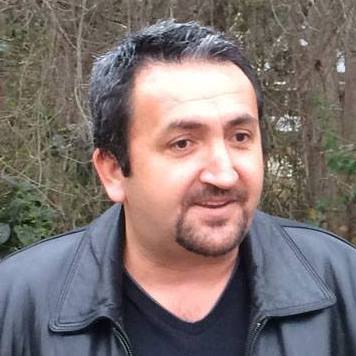
Zafer Unal
Zafer Unal
Program Lead

Professor & Associate Dean of Undergraduate Studies, USF College of Education

unal@usf.edu

Expert in educational technology and computer science education. Leads initiatives in curriculum transformation, AI in education, and student success. Research focuses on developing tools to make learning more accessible and engaging across K-12 and higher education contexts.

Stephanie Arthur
Stephanie Arthur, Ph.D.
Assistant Professor

Assistant Professor, Science Education — USF College of Education

sat2@usf.edu

Expert in Science and STEAM Education with a focus on inclusive pedagogy. Leads research in generative AI to support teaching, learning, and community partnerships. Emphasizes designing innovative educational tools and promoting equitable learning opportunities.

Frequently Asked Questions

The program is planned to begin Fall 2026.

The CS Education sequence includes EDG 4430–4437 (8 content courses), plus field experiences EDG 4438 (Early Field Experiences) and EDG 4439 (Final Field Experience).

Clinical education includes EDE 4947, EDE 4948, and EDE 4949. These courses provide structured field experience in K-12 school settings.

All 10 computer science courses (30 credits) are specifically aligned with the seven FTCE Computer Science K–12 exam competencies. Each course covers the content knowledge and skills needed to pass the state certification exam. You also get free access to the AI-powered FTCE preparation platform.

Students must pass three FTCE exams during their final internship:

1. FTCE General Knowledge Exam
2. FTCE Professional Education Exam
3. FTCE Computer Science K–12 Subject Area Exam

USF provides FREE access to an AI-powered test preparation platform with content, quizzes, practice exams, and 24/7 question support for all three exams.

Use the Contact section below to connect with the program team for advising and next steps. You can reach us by email at unal@usf.edu or by phone at (813) 974-2011.

Contact Us

Have questions or need more information? We're here to help with program details, advising, and next steps.

Email

unal@usf.edu

Send Email
Phone

(813) 974-2011

Call Us
Location

University of South Florida
Tampa, FL 33620

Get Directions