Undergraduate Minor — AI in Teaching & Learning

Artificial Intelligence (AI) in Teaching & Learning

University of South Florida, College of Education — develop AI literacy, ethical awareness, and practical skills to use artificial intelligence responsibly and effectively in teaching and learning environments.

  • 12 credit hours — flexible undergraduate minor to complement any major
  • 4 focused courses covering AI foundations, ethics, curriculum design, and teaching integration
  • 100% online — synchronous and asynchronous options
Fall 2027 program start
100% Online flexible delivery
12 Credits undergraduate minor

Prepare for an AI-Enabled Future

The Undergraduate Minor in Artificial Intelligence (AI) in Teaching & Learning prepares students to understand foundational AI concepts, evaluate AI tools, apply AI responsibly in instructional and learning contexts, design AI-supported curriculum and assessments, and navigate the ethical dimensions of AI in education.

What You Will Learn
  • Understand foundational AI concepts and how they apply to education
  • Evaluate AI tools critically for instructional and learning contexts
  • Design AI-supported curriculum, lesson plans, and assessments
  • Apply AI ethically — addressing bias, privacy, equity, and accessibility
  • Integrate AI tools into your teaching practice and professional workflow
Minor Overview
  • Credential: Undergraduate Minor
  • Program Name: Artificial Intelligence (AI) in Teaching & Learning
  • Total Credits: 12 credit hours (4 courses)
  • Format: 100% online (synchronous & asynchronous)
  • Start Date: Fall 2027
  • Department: Teaching and Learning, College of Education
  • Open to: All USF undergraduate students

Who Should Pursue This Minor?

This minor is ideal for undergraduate students in teacher preparation, education, instructional design, human services, communication, or any field where AI is reshaping how people teach, learn, communicate, and work. It is especially valuable for students who want to add structured, ethical AI preparation to their primary degree before entering the workforce.

Course Requirements

Complete all four courses for a total of 12 credits. Courses are offered 100% online beginning Fall 2027.

Minor Courses 4 courses — 12 credits
EDG 4XXX — Introduction to AI in Teaching & Learning (3 credits)
Foundational AI concepts and their relevance to education. Students explore how AI systems work, what they can and cannot do, and how they are beginning to influence schools, classrooms, and learning environments. Emphasis on building vocabulary, critical thinking, and informed perspectives on AI in education.
EDG 4XXX — AI In and Out of the Classroom (3 credits)
Examines how AI is being used inside and outside K–12 and higher education settings. Students evaluate AI-powered tools for instruction, productivity, assessment feedback, and student support. Addresses ethical considerations including privacy, algorithmic bias, equity, and appropriate use in educational contexts.
EDG 4XXX — AI in Curriculum Design, Planning & Assessment (3 credits)
Focuses on applying AI tools to support curriculum design, lesson planning, and assessment development. Students design AI-supported instructional materials, explore adaptive learning technologies, and evaluate AI-assisted assessment strategies with attention to quality, fairness, and alignment to learning goals.
EDG 4XXX — Integrating AI into Your Teaching (3 credits)
Capstone course focused on practical, responsible integration of AI tools into teaching and professional practice. Students develop a personal AI integration plan, reflect on ethical responsibilities, and demonstrate applied skills in selecting, evaluating, and using AI to support diverse learners and learning goals.

Advising Note

Course numbers, prerequisites, and scheduling will be confirmed at program launch. Contact the program faculty for advising and next steps.

Career Opportunities & Pathways

AI literacy is increasingly expected across education, training, instructional design, and a wide range of professions. This minor prepares you for an AI-enabled workforce regardless of your primary major.

Education & Teaching

Graduates entering teaching at any level will be equipped to use AI tools responsibly to support instruction, personalize learning, and save time on planning.

  • K–12 Teacher — integrate AI tools to support diverse learners and differentiate instruction
  • Higher Education Instructor — apply AI-assisted pedagogy and course design
  • Tutoring & Learning Support — use adaptive AI tools to personalize student support
Instructional Design & EdTech

AI fluency is a sought-after skill in curriculum development and educational technology roles.

  • Instructional Designer — develop AI-supported learning materials and curriculum (SOC 25-9031)
  • Instructional Technology Specialist — help schools and organizations evaluate and deploy AI tools
  • Curriculum Developer — design AI-aware learning experiences for districts or EdTech companies
Training & Workforce Development
  • Training & Development Specialist — design AI-supported workplace learning (SOC 13-1151)
  • Corporate Trainer — deliver professional development on AI tools and digital skills
  • Human Services Professional — leverage AI tools for client support, case management, and program delivery
Growing Demand

The Tampa Bay region's CareerSource 2024–2025 Regional Demand Occupations List identifies Training and Development Specialists (SOC 13-1151) as a high-skill, high-wage occupation with strong regional demand.

  • AI literacy is increasingly expected across all education-related fields
  • Employers seek graduates who can evaluate and use AI tools ethically
  • Early AI preparation sets you apart in any education-adjacent career
Pairs Well With Any Major

Because AI is transforming every field, this minor adds value across disciplines:

  • Education & Teacher Preparation
  • Communication & Media
  • Psychology & Human Services
  • Business & Management
  • Health Sciences & Public Health
  • Social Sciences

How to Add This Minor

The AI in Teaching & Learning minor is open to all USF undergraduate students. Add it to your degree program through the standard USF minor declaration process.

Enrollment Timeline
Fall 2027 Program Start
Fall 2026 Interest forms and advising meetings open.
Spring 2027 Course registration opens for enrolled minor students.
August 2027 Fall 2027 — First courses begin
Requirements to Declare the Minor
  • Must be an enrolled USF undergraduate student in good academic standing
  • No prerequisite courses required to declare
  • Complete the minor declaration through your academic advisor or the Registrar's Office

Cost & Financial Information

Tuition for minor courses is charged at standard USF undergraduate per-credit-hour rates and varies by residency status and course load.

Cost of the Minor

The minor is 12 credit hours of coursework funded through existing E&G (Education & General) resources — not a market rate or cost recovery program. Tuition is charged at standard USF undergraduate rates.

Note: Standard USF university fees may apply per semester.

Financial Aid Options

Minor credits count toward your overall enrollment and may be covered by existing financial aid awards if you are enrolled full-time.

Need Guidance?

Contact Financial Aid or your academic advisor to confirm how the minor credits affect your aid eligibility and enrollment status.

Meet Program Faculty

The minor is led by experienced USF College of Education faculty with expertise in AI in education, instructional technology, and inclusive pedagogy.
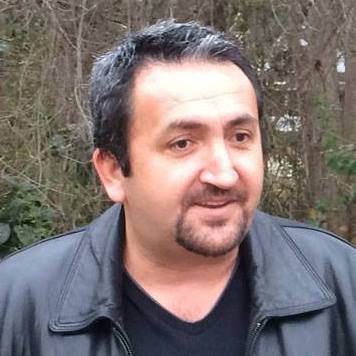
Zafer Unal
Zafer Unal, Ph.D.
Program Lead

Professor & Associate Dean of Undergraduate Studies, USF College of Education

unal@usf.edu

Expert in educational technology and computer science education. Leads initiatives in curriculum transformation, AI in education, and student success. Research focuses on developing tools to make learning more accessible and engaging across K-12 and higher education contexts.

Stephanie Arthur
Stephanie Arthur, Ph.D.
Assistant Professor

Assistant Professor, Science Education — USF College of Education

sat2@usf.edu

Expert in Science and STEAM Education with a focus on inclusive pedagogy. Leads research in generative AI to support teaching, learning, and community partnerships. Emphasizes designing innovative educational tools and promoting equitable learning opportunities.

Frequently Asked Questions

The minor is planned to launch in Fall 2027. Advising and interest forms will be available beginning Fall 2026.

Any enrolled USF undergraduate student in good academic standing may declare the minor. There are no prerequisite courses required. The minor is designed to complement any major — education, communication, business, health sciences, social sciences, and more.

Yes. The USF College of Education already offers a Graduate Certificate in AI in Teaching & Learning for graduate students and practicing educators. This undergraduate minor was created to offer the same focus at the undergraduate level using 4000-level EDG courses — making the content accessible before students enter the workforce.

No. The minor does not lead to licensure or professional certification. It is an academic credential that enhances your degree and prepares you to use AI responsibly in educational and professional contexts. Students seeking Florida teacher certification should explore USF's teacher preparation programs.

All four courses are offered 100% online in a combination of synchronous and asynchronous formats, providing flexibility for students across USF campuses and schedules. Courses are delivered through Canvas, USF's learning management system.

Use the Contact section below to reach the program team. You can email us at unal@usf.edu or call (813) 974-2011.

Contact Us

Have questions about the minor, advising, or how to declare? We're here to help.

Email

unal@usf.edu

Send Email
Phone

(813) 974-2011

Call Us
Location

University of South Florida
Tampa, FL 33620

Get Directions